
Melatonin, magnesium, and valerian have the strongest research backing among natural sleep supplements, though the evidence strength and optimal dosing vary for each and depend on the specific sleep problem you are facing. Melatonin, for example, is most useful for sleep-onset trouble and jet lag, but trial doses and effects are heterogeneous across studies. Valerian may improve sleep quality through GABAergic modulation, though the evidence is mixed. Magnesium supports nervous system relaxation and tends to help people who wake frequently. L-theanine reduces nighttime arousals, making it a solid pick for maintenance insomnia. Glycine and tryptophan show promise for sleep initiation in select trials. CBD and CBD+CBN formulations have mixed evidence but may help people whose poor sleep is driven by anxiety or stress.
- Melatonin: circadian regulator; best for sleep-onset delay, jet lag, shift work
- Valerian: GABAergic modulation; some support for sleep quality and onset
- Magnesium: nervous system relaxation; supports sleep efficiency and reduces night wakings
- L-theanine: promotes calm without sedation; reduces nighttime arousals
- Glycine: lowers core body temperature; supports faster sleep onset
- Tryptophan: serotonin/melatonin precursor; modest evidence for onset latency
- Zinc: cofactor in melatonin synthesis; limited but supportive evidence
- CBD/CBD+CBN: mixed evidence; may help anxiety-related sleep disturbance
- Chamomile: mild anxiolytic via apigenin; weak but consistent evidence
- Hops: sedative properties; often combined with valerian
- Kava: anxiolytic; effective but carries liver-toxicity risk
Safety callout: If you’re pregnant, breastfeeding, taking sedatives, anticoagulants, or antidepressants, check with your clinician before starting any of these. Kava carries a rare but documented risk of liver injury and deserves special caution.
Pro Tip: No supplement replaces good sleep hygiene. Johns Hopkins clinicians recommend using supplements alongside consistent sleep schedules, dark rooms, and limited screen time before bed — not instead of them.
Key Takeaways
Melatonin, magnesium, and valerian have the strongest evidence among natural sleep supplements, and matching the supplement to your specific sleep problem — onset, maintenance, or anxiety-driven — is the most important step before buying anything.
| Point | Details |
|---|---|
| Match supplement to problem | Melatonin for onset/circadian issues; magnesium and L-theanine for maintenance; chamomile or L-theanine for anxiety-driven sleep trouble. |
| Valerian and hops have evidence, with caveats | A literature review found positive signals for both, but variable product quality and heterogeneous doses limit definitive guidance. |
| Kava carries liver-toxicity risk | Kava is effective for anxiety-related insomnia but is not appropriate for casual or long-term use without medical supervision. |
| Third-party testing is non-negotiable | Look for USP, NSF, or ConsumerLab certification; melatonin potency varies significantly between brands. |
| Wild Heart Supplements for stress-linked sleep trouble | Full-spectrum CBD+CBN gummies and oils are third-party tested and designed for anxiety- or stress-related sleep difficulty. |
Table of Contents
- How natural sleep supplements compare: what the evidence actually shows
- How to pick the right supplement for your specific sleep problem
- Safety, drug interactions, and what to look for on a supplement label
- Practical dosing, timing, and how long to give a supplement a fair trial
- How strong is the evidence? A synthesis of key reviews and trials
- When supplements aren’t enough: signs you need a clinician
- A perspective on what actually matters when choosing sleep supplements
- Wild Heart Supplements’ sleep products and how they fit the evidence
- Sources
How natural sleep supplements compare: what the evidence actually shows
The research on plant-based sleep aids is uneven. Some supplements have multiple randomized controlled trials and meta-analyses behind them. Others have one small study and a lot of marketing. Here is what the clinical picture looks like for each.
Melatonin
Melatonin is a hormone your pineal gland produces in response to darkness. Supplemental melatonin works best when your internal clock is out of sync with your desired sleep time — jet lag, shift work, delayed sleep phase disorder. It is less effective for people who fall asleep fine but wake up at 3 AM.
Typical trial doses often range from low to moderate amounts taken before the target bedtime. Lower doses (0.5–1 mg) often work as well as higher ones for circadian adjustment, with fewer next-day grogginess complaints. MedlinePlus notes that certain medications and medical conditions can affect melatonin’s safety profile, so a quick check with your pharmacist matters if you’re on any regular prescriptions.
One practical issue: melatonin products vary widely in actual potency between brands. Johns Hopkins clinicians advise picking one trusted brand and sticking with it rather than switching around.
Valerian
Valerian root is one of the most studied herbal sleep remedies. Its proposed mechanism involves increasing GABA availability in the brain, similar to how some prescription sleep medications work, though far less potently. A 2024 literature review published on PMC found valerian shows evidence for improving sleep quality and reducing insomnia symptoms, while flagging heterogeneous doses and variable product quality as ongoing problems.
Typical trial doses usually involve a moderate amount of standardized extract taken prior to bedtime. Effects may take 2–4 weeks of consistent use to become noticeable. Valerian is generally well-tolerated, though some people report vivid dreams or mild morning grogginess.
Magnesium
Magnesium is involved in many enzymatic reactions, including those that regulate the nervous system and support GABA receptor activity. Low magnesium levels are associated with poor sleep quality, and supplementation appears to help people who are deficient or borderline deficient — a surprisingly common situation in American adults.
MedlinePlus reports that magnesium supplements can support sleep at recommended doses but may cause gastrointestinal side effects (particularly diarrhea) and should be used cautiously by people with kidney disease. Magnesium glycinate and magnesium threonate tend to cause fewer GI issues than magnesium oxide. Typical trial doses: 200–400 mg nightly.
Glycine
Glycine is an amino acid that lowers core body temperature, which is one of the physiological signals that triggers sleep onset. Some small trials suggest intake before bed may reduce sleep onset latency and improve next-day alertness. It is one of the gentler options in this category, with a good safety profile and no known major drug interactions at typical doses.
L-theanine
Found naturally in green tea, L-theanine promotes alpha-wave brain activity — a relaxed but alert mental state. It does not sedate you; it quiets mental noise. This makes it particularly useful for people whose sleep problem is racing thoughts or anxiety-driven wakefulness rather than a circadian issue. Typical doses in trials are usually moderate and varied according to the product. The Sleep Foundation highlights L-theanine as one of the more commonly used natural sleep aids, noting its favorable safety profile and potential to reduce nighttime arousals.
CBD (cannabidiol) and CBD+CBN
CBD’s evidence for sleep is genuinely mixed. Some people with anxiety-related sleep disturbance report meaningful improvement; controlled trials show more modest and inconsistent results. CBD likely helps sleep indirectly by reducing anxiety and stress rather than acting as a direct sedative. CBN (cannabinol) is often combined with CBD in sleep-targeted products, with the combination showing some promise in early research, though large RCTs are still limited.
Clinical resources note that CBD products carry label accuracy concerns and interact with hepatically metabolized medications. If you’re on any prescription drugs, a pharmacist check before starting CBD is worth the five minutes. For a deeper look at the evidence behind CBD and CBN specifically for sleep, Wild Heart Supplements has a detailed breakdown at CBD + CBN for sleep: does it actually work?
Chamomile
Chamomile works primarily through apigenin, a flavonoid that binds to GABA-A receptors and produces mild sedation. The evidence is modest but consistent: chamomile extract appears to reduce anxiety and improve subjective sleep quality, particularly in older adults. It is one of the safest options on this list. Typical doses in trials involve moderate quantities of standardized extract.
Hops
Hops (Humulus lupulus) has sedative properties and is frequently combined with valerian in commercial herbal sleep products. The PMC literature review found evidence supporting hops alongside valerian and melatonin for sleep quality improvement. On its own, the evidence for hops is thinner than for valerian, but the combination appears to have additive effects.
Kava
Kava is effective for anxiety-related sleep problems. Its active compounds (kavalactones) modulate GABA receptors and reduce cortisol. The problem is safety: kava carries a documented risk of rare but serious liver injury, and the FDA has issued warnings about this. It is not a supplement to take casually or long-term without medical supervision. If anxiety is driving your sleep problems, L-theanine or CBD are lower-risk starting points.
Tryptophan
Tryptophan is an essential amino acid and the dietary precursor to serotonin and melatonin. A randomized crossover trial (n=43) found that a mulberry leaf extract combined with tryptophan reduced sleep onset latency by roughly 3–4 minutes on actigraphy and improved next-day mood compared to control. The effect is modest, but the trial was well-designed. Tryptophan is most effective when taken with a small low-glycemic carbohydrate snack, which helps it cross the blood-brain barrier.
Pro Tip: Tryptophan competes with other large neutral amino acids for brain entry. A small carbohydrate snack (a few crackers, a piece of fruit) taken alongside it reduces that competition and may improve its effectiveness.
Zinc
Zinc plays a supporting role in melatonin synthesis and has shown some benefit for sleep quality in studies, particularly in older adults. The evidence is limited compared to melatonin or magnesium, but zinc is generally safe at standard dietary supplement doses (8–11 mg daily) and is often included in sleep-support blends for this reason.
Quick-reference summary
How to pick the right supplement for your specific sleep problem
The most common mistake people make is picking a supplement based on what’s popular rather than what matches their actual problem. Melatonin is everywhere, but it does almost nothing for someone who falls asleep fine and wakes at 4 AM.
Step 1: Identify your sleep problem
- Trouble falling asleep (sleep onset insomnia): Melatonin, glycine, tryptophan, and L-theanine are your best starting points. If anxiety is the driver, add L-theanine or chamomile.
- Waking during the night (sleep maintenance insomnia): Magnesium, L-theanine, and sustained-release melatonin formulations are more relevant here.
- Early morning waking: Often a sign of depression or circadian disruption. Supplements help less here; a clinician evaluation is worth prioritizing.
- Anxiety-driven sleeplessness: L-theanine, chamomile, and CBD (for some people) address the anxiety component. Kava is effective but carries too much risk for casual use.
- Jet lag or shift work: Melatonin, timed to the destination sleep schedule, is the most evidence-supported option.
Step 2: Filter by your health context
- Pregnant or breastfeeding: Avoid kava, valerian, and most herbal extracts. Magnesium at dietary levels is generally considered safe, but check with your OB before adding any supplement.
- Liver disease: Avoid kava entirely. Use caution with valerian and discuss any herbal supplement with your gastroenterologist.
- Kidney disease: Magnesium supplements require caution; your kidneys regulate magnesium excretion, and supplementation can cause accumulation.
- On sedatives, benzodiazepines, or sleep medications: Valerian, kava, and CBD can all potentiate sedation. This is a conversation to have with your prescribing physician before adding anything.
- On anticoagulants (warfarin, etc.): Valerian and some herbal blends may affect clotting. Pharmacist check required.
- On antidepressants (SSRIs, MAOIs): Tryptophan and 5-HTP carry a theoretical risk of serotonin syndrome when combined with serotonergic medications. Discuss with your prescriber.
- Older adults: The National Council on Aging notes that natural supplements are generally non-habit-forming, which makes them preferable to OTC antihistamine-based sleep pills for long-term use in older adults. That said, older adults are also more sensitive to sedative effects and more likely to be on interacting medications.
- Children: No herbal sleep supplement has been adequately studied in children. Melatonin is sometimes used short-term in pediatric settings, but only under medical guidance.
Step 3: Evaluate systematically
- Start with one supplement at a time. Adding three things at once makes it impossible to know what’s working.
- Use the lowest dose studied in trials first.
- Run a defined trial: 2–4 weeks for minerals and herbal extracts, shorter for melatonin (which often shows effects within a few nights for circadian issues).
- Keep a simple sleep diary: note time to fall asleep, number of wakings, and how you feel in the morning.
- Stop if you experience side effects, and report them to your clinician.
Questions to bring to your clinician or pharmacist:
- Does this supplement interact with any of my current medications?
- Is there a reason I should avoid this given my medical history?
- What dose and formulation would you recommend?
- How long should I try it before deciding it’s not working?
Pro Tip: A pharmacist is often the fastest and most accessible resource for drug-interaction checks. Most pharmacy chains offer free consultations, and they have access to interaction databases your supplement’s label does not.
Safety, drug interactions, and what to look for on a supplement label
Supplements are not regulated the same way prescription drugs are. The FDA does not require manufacturers to prove safety or efficacy before a supplement hits the market. That gap matters when you’re choosing a product.
Drug interactions to know
- Melatonin interacts with blood thinners, immunosuppressants, diabetes medications, and contraceptives. MedlinePlus provides a detailed interaction list worth reviewing if you’re on any regular medications.
- Valerian potentiates CNS depressants (alcohol, benzodiazepines, sedative medications) and may interact with some antifungal drugs.
- Kava is metabolized by liver enzymes (CYP450 pathway) and can interact with a wide range of medications, including statins, antifungals, and anticonvulsants. Its liver-toxicity risk is not dose-dependent in all cases, meaning even short-term use can occasionally cause problems.
- CBD is also metabolized via CYP450 and can raise or lower blood levels of many prescription drugs. This is not a theoretical concern — it is clinically documented.
- Valerian + alcohol or sedatives: additive sedation; avoid combining.
High-risk groups
- Pregnancy/breastfeeding: Most herbal sleep supplements have not been studied in pregnant or breastfeeding women. Default to caution and clinician guidance.
- Older adults: More sensitive to sedative effects; higher fall risk with any sedating supplement.
- People with liver disease: Kava is contraindicated. Valerian and CBD should be discussed with a physician.
- Children: Avoid herbal sleep supplements unless specifically directed by a pediatrician.
Product quality checklist
The supplement industry’s self-regulation is uneven, but third-party testing programs provide a meaningful quality signal:
- USP Verified: confirms the product contains what the label says, at the stated dose, without harmful contaminants
- NSF Certified: similar scope; also used for sports supplements
- ConsumerLab: independent testing organization that publishes pass/fail results for commercial products
- Look for standardized extracts (e.g., valerian standardized to 0.8% valerenic acid) rather than raw herb powders, which vary in potency
- Avoid proprietary blends that list multiple ingredients without disclosing individual doses — you cannot evaluate safety or efficacy without knowing what you’re actually taking
- Check that the label lists lot number, expiration date, and manufacturer contact information
Pro Tip: Before buying any sleep supplement, search the product name on ConsumerLab or check the NSF or USP databases. A product that fails third-party testing for melatonin potency — and many do — may contain a fraction of the stated dose or several times more.
The PMC literature review specifically flags variable product quality and heterogeneous dosing as reasons why clinical evidence for herbal supplements is hard to interpret. A study using a standardized extract at a specific dose tells you very little about the generic valerian capsule you picked up at a gas station.
Practical dosing, timing, and how long to give a supplement a fair trial
Knowing the right dose matters less than knowing the right dose for your situation. Here is a practical reference.
Combination strategies
Combining mechanisms can make sense for complex insomnia. An amino acid approach for initiation (tryptophan or glycine) paired with magnesium for relaxation is a common evidence-informed strategy. Low-dose melatonin combined with consistent sleep hygiene is the most studied combination for circadian-related onset problems.
What to avoid: stacking multiple sedating supplements (valerian + kava + CBD + alcohol, for example). The additive sedation risk is real, and the interaction profile becomes unpredictable.
Practical timing notes
- Take melatonin at the same time each night relative to your target sleep time, not just “before bed” — consistency is what trains the circadian signal.
- Magnesium and zinc are better absorbed with food; taking them on an empty stomach increases GI side effect risk.
- Alcohol disrupts sleep architecture even when it helps you fall asleep faster. No supplement compensates for regular alcohol use near bedtime.
- Morning grogginess from melatonin usually means the dose is too high or taken too late. Try halving the dose before abandoning it.
- L-theanine can be taken without food and does not cause next-day sedation at typical doses.
How strong is the evidence? A synthesis of key reviews and trials
The honest answer is: it varies a lot by supplement, and the overall evidence base is weaker than most supplement marketing implies.
Where the evidence is strongest:
- Melatonin has the most consistent support, particularly for circadian-related sleep problems. Multiple meta-analyses confirm its efficacy for jet lag and delayed sleep phase.
- Valerian and hops show positive signals in the PMC literature review, but the review explicitly notes heterogeneous doses, variable product quality, and the need for larger, better-designed trials before definitive clinical guidance is possible.
- Magnesium has a plausible mechanism and supportive evidence, particularly in people with low baseline magnesium levels.
Where the evidence is mixed or limited:
- CBD has biological plausibility and anecdotal support but inconsistent RCT results. The integrative review published in Naunyn-Schmiedeberg’s Archives of Pharmacology describes proposed mechanisms for multiple herbs and nutraceuticals while calling for more clinical validation across the board.
- Chamomile, hops, and kava have supporting evidence but mostly from small trials with methodological limitations.
- Tryptophan showed a modest but statistically significant effect in one well-designed trial:
The effect size matters here. A 3–4 minute reduction in sleep onset latency is statistically significant but clinically modest. For someone lying awake for 90 minutes, it may not feel like much. For someone with mild onset delay, it could be meaningful.
What the reviews consistently say:
- Small sample sizes and short trial durations limit conclusions across nearly all herbal sleep supplements.
- Dose and formulation heterogeneity make it hard to compare studies or extrapolate to commercial products.
- Long-term safety data is sparse for most herbal options.
The Sleep Foundation’s summary of natural sleep aids reflects this same picture: promising signals for several supplements, but regulatory and labeling variability mean the product you buy may not match what was studied.
When supplements aren’t enough: signs you need a clinician
Natural sleep remedies work best for mild to moderate sleep difficulty. Some sleep problems require medical evaluation, and using supplements to manage them without diagnosis can delay effective treatment.
See a clinician if you notice any of these:
- Loud snoring, gasping during sleep, or observed breathing pauses (possible sleep apnea — supplements do nothing for this)
- Excessive daytime sleepiness despite adequate time in bed
- Sudden onset insomnia accompanied by neurological symptoms (headache, vision changes, confusion)
- Signs of depression, anxiety disorder, or mood changes alongside sleep problems
- Persistent insomnia lasting more than three months despite good sleep hygiene and supplement trials
- Restless legs, leg cramps, or uncomfortable sensations that disrupt sleep
- Suicidal ideation or significant psychological distress
Who to contact:
- Primary care physician: First stop for most sleep complaints; can rule out medical causes, review medications, and refer appropriately.
- Sleep medicine specialist: For suspected sleep apnea, narcolepsy, circadian rhythm disorders, or treatment-resistant insomnia.
- Psychiatrist or psychologist: When mood disorders, anxiety, or PTSD are driving sleep problems. Cognitive behavioral therapy for insomnia (CBT-I) has stronger long-term evidence than any supplement.
- Pharmacist: For drug-interaction checks before starting any supplement, especially if you’re on multiple medications.
What a clinical evaluation typically covers:
- Detailed sleep history (onset, duration, pattern, daytime function)
- Screening for sleep apnea (Epworth Sleepiness Scale, possible overnight oximetry or polysomnography)
- Medication review for drugs that disrupt sleep (beta-blockers, corticosteroids, stimulants, some antidepressants)
- Screening for mood and anxiety disorders
- Lab work if a deficiency (magnesium, iron, thyroid) is suspected
Supplements can absolutely fit into a clinician-led plan. Many physicians are comfortable recommending melatonin, magnesium, or L-theanine as adjuncts to CBT-I or while awaiting specialist referral. The key word is adjunct — not replacement.
A perspective on what actually matters when choosing sleep supplements
Sleep supplement marketing has one consistent problem: it sells certainty the evidence does not support. Walk into any pharmacy and you will find products claiming to “restore deep sleep” or “support REM cycles” based on a single ingredient at a dose that was never tested in humans at that level.
The supplements with the most consistent evidence share a few traits. They have a clear, plausible mechanism. They have been tested in multiple independent trials, not just one industry-funded study. Their effects are modest and specific — they help a defined problem, not “sleep” as a vague concept. Melatonin for circadian disruption fits this profile. Magnesium for people with low baseline levels fits it. Valerian, with caveats about product quality, fits it partially.
What the evidence does not support is the idea that any single supplement fixes chronic insomnia. The most effective non-pharmacological treatment for insomnia is CBT-I, which addresses the behavioral and cognitive patterns that perpetuate poor sleep. Supplements work best as adjuncts to that kind of structural change, not as standalone solutions.
There is also a real quality problem in this category. A supplement that contains half the stated dose of melatonin, or a valerian product made from raw herb powder rather than a standardized extract, is not the same thing as what was studied in the trials. Third-party testing is not a marketing gimmick — it is the only way to know whether the product you’re taking resembles the one that showed results in research.
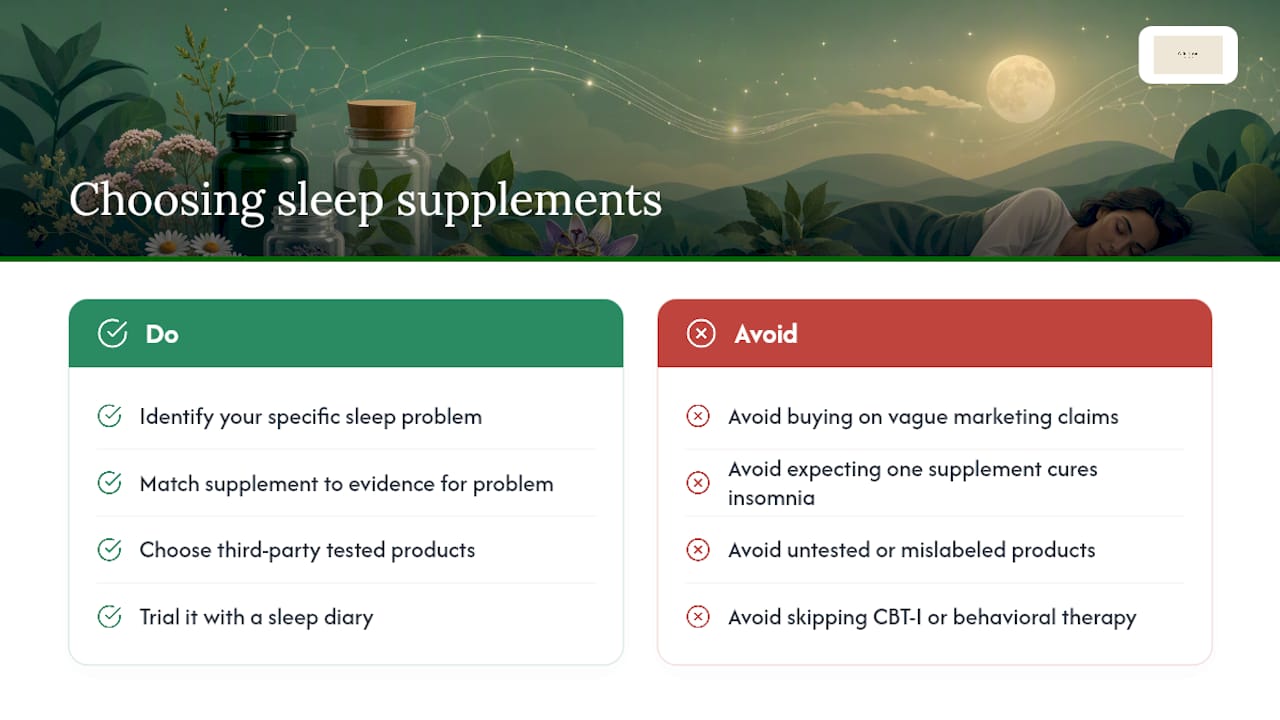
The most useful thing you can do before buying a sleep supplement is to identify your specific problem (onset, maintenance, anxiety-driven), match it to the supplement with the best evidence for that problem, choose a third-party tested product, and give it a defined trial period with a sleep diary. That approach is more likely to produce a useful answer than buying whatever is on sale.
Wild Heart Supplements’ sleep products and how they fit the evidence
Full-spectrum CBD and CBD+CBN formulations sit in a specific lane within the natural sleep supplement space: they are most likely to help people whose sleep problems are driven by stress, anxiety, or difficulty winding down rather than a straightforward circadian issue. That is exactly the gap Wild Heart Supplements’ sleep-focused products are designed to address.
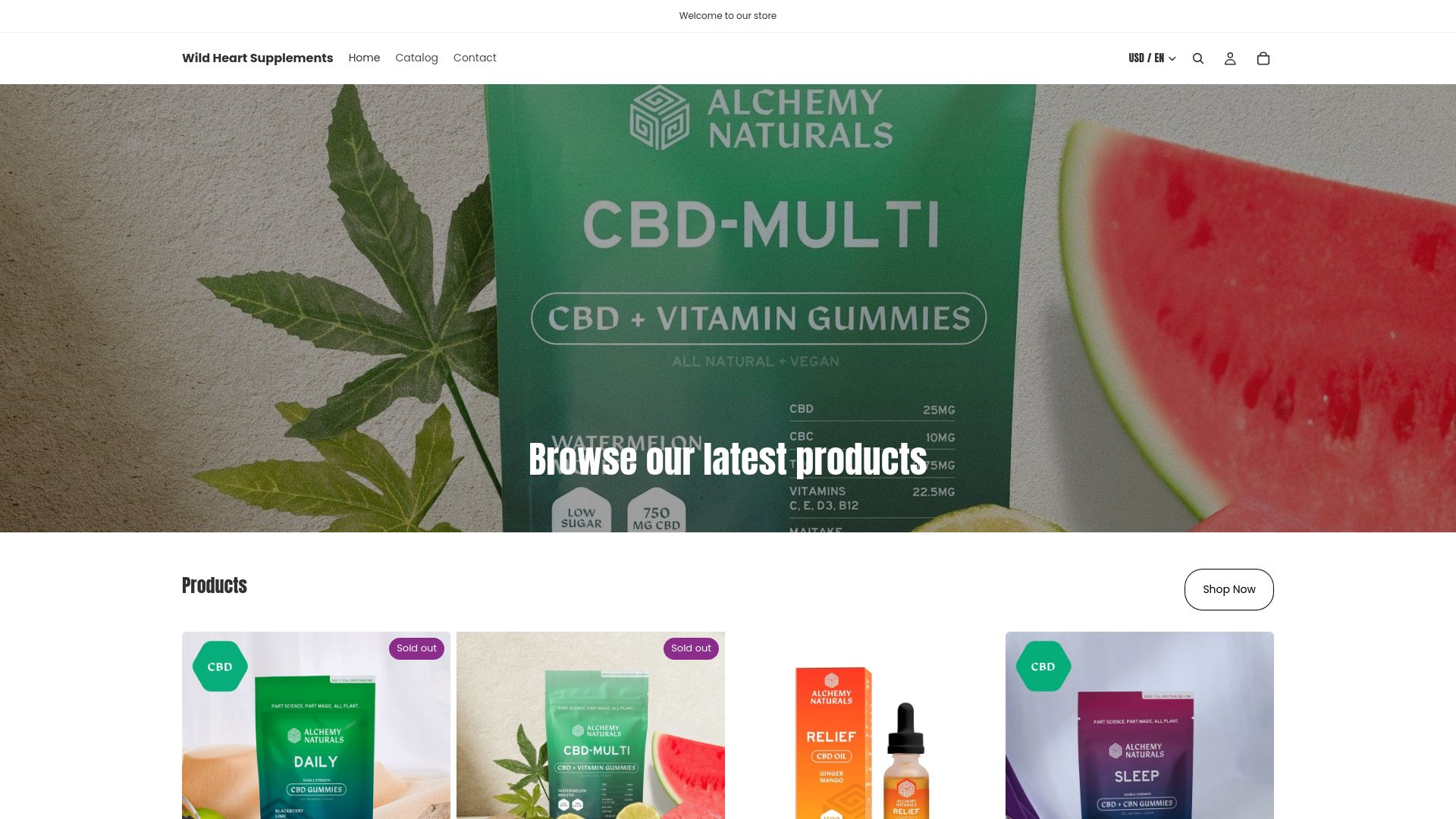
Wild Heart Supplements formulates its sleep products with nutraceutical-grade full-spectrum CBD and CBN, with clear labeling and third-party lab testing — the quality standard the evidence consistently points to as non-negotiable in this category. The CBD + CBN sleep gummies combine both cannabinoids in a format that’s easy to dose consistently, which matters when you’re running a defined trial period. The CBD sleep oil offers a tincture option for those who prefer faster absorption or more precise dose adjustment.
One important note: if you’re combining CBD with other sedating supplements or prescription medications, check with your pharmacist first. CBD is metabolized in the liver by enzymes that include CYP450 pathway and can affect blood levels of other drugs. Wild Heart Supplements recommends consulting a clinician when combining CBD with any prescription sleep medication or sedative.
Browse the full CBD gummies and tinctures collection to find the formulation that fits your routine.
Sources
The sources below are the primary references used in this article. Each is worth bookmarking if you want to go deeper on a specific supplement.
- Herbal and Natural Supplements for Improving Sleep: A Literature Review
- Natural Sleep Aids: Home Remedies to Help You Sleep | Johns Hopkins Medicine
- Mulberry leaf extract combined with tryptophan improves sleep and post wake mood in adults with sleep complaints - A randomized cross-over study
- Natural ways to get better sleep
- Natural Sleep Aids: Which Are the Most Effective?
- Integrative sleep management: from molecular pathways to conventional and herbal treatments | Naunyn-Schmiedeberg’s Archives of Pharmacology | Springer Nature Link
- Melatonin - MedlinePlus
This article is general information, not a substitute for advice from a qualified doctor. Consult a qualified healthcare professional about your own circumstances before acting on anything here.
Recommended
- CBD + CBN for Sleep: Does It Actually Work? | Wild Heart – Wild Heart Supplements
- 6-Pack CBD Sleep Oil 1500mg | Bulk Value | Wild Heart Supplements
- 6-Pack CBD Sleep Gummies | Full Spectrum CBD + CBN | Wild Heart – Wild Heart Supplements
- CBD Gummies for Sleep | Full Spectrum CBD + CBN | Wild Heart – Wild Heart Supplements