
The entourage effect is the hypothesis that cannabinoids, terpenes, and other cannabis compounds work together to produce effects that no single isolated compound achieves alone. Current evidence is suggestive but not conclusive. Systematic reviews and randomized controlled trials show therapeutic signals for cannabis-based products, yet researchers have not proven that synergistic compound interactions are the cause. Three things are worth knowing before you go further:
- Full-spectrum cannabis products may behave differently than isolates, but the difference is not reliably predictable from product to product.
- The term “entourage effect” appears frequently in marketing, often describing what pharmacologists would simply call synergy or polypharmacy.
- Safety and product consistency matter as much as compound profile, particularly for anyone managing a health condition.
| Point | Details |
|---|---|
| Evidence status | Suggestive but not conclusive; no RCT has isolated an entourage mechanism as the causal driver. |
| Full-spectrum vs. isolate | Whole-plant extracts may differ in effect from isolates, but batch variability limits predictability. |
| Safety first | THC-containing products carry more adverse-effect risk than CBD-dominant ones; drug interactions are real. |
| Product quality | Third-party lab testing and batch certificates of analysis are the most reliable quality signals available. |
Table of Contents
- What does “entourage effect” actually mean?
- What does this mean for consumers and patients in the United States?
- How do researchers actually test the entourage hypothesis?
- Key Takeaways
- The entourage effect and what the marketing gets wrong
- Wildheartsupplements full-spectrum products for curious, careful consumers
- Useful sources
What does “entourage effect” actually mean?
The phrase was coined in 1998 by Israeli researchers Raphael Mechoulam and Shimon Ben-Shabat, originally to describe how endogenous lipids enhanced the activity of the body’s own endocannabinoid ligands. The concept was not about cannabis at all. It migrated into cannabis science in the early 2000s, and by the 2010s it had become a fixture of cannabis marketing, applied broadly to any claim that whole-plant extracts outperform isolated cannabinoids.
That migration created two distinct uses of the term. In its narrower, original sense, it refers to interactions among endocannabinoids and their accompanying lipids. In its broader, now-dominant sense, it describes the hypothesis that THC, CBD, minor cannabinoids, terpenes, and flavonoids interact to produce therapeutic effects greater than the sum of their parts.
That distinction matters for consumers. When a product label invokes the entourage effect, it is making a pharmacological claim that the science has not yet confirmed at the clinical level. That does not make full-spectrum products useless. It means the mechanism behind any benefit they provide is still being worked out.
What does this mean for consumers and patients in the United States?
The scientific picture translates into a few practical decisions, none of which require certainty about the entourage mechanism to be useful.
On product choice: if you are interested in potential cannabis synergy, full-spectrum extracts are the logical starting point. They contain the full range of naturally occurring cannabinoids and terpenes, as opposed to broad-spectrum products (which remove THC) or isolates (which contain only one cannabinoid). The tradeoff is that full-spectrum products with THC are subject to state law in the U.S., and their psychoactive effects require careful dose management.

On safety: CBD-dominant products have a more favorable adverse-effect profile than THC-dominant ones. Adding CBD to a THC-containing product may attenuate some acute THC effects, but results across studies are mixed. Anyone with a history of psychosis, cardiovascular disease, or pregnancy should avoid THC-containing products entirely.
On drug interactions: cannabinoids inhibit CYP3A4 and CYP2C9 enzymes, which metabolize a large number of common medications, including blood thinners, antiepileptics, and certain antidepressants. This is not a theoretical risk. The FDA has flagged that cannabis products can interact with other medications and that regulatory oversight of marketed CBD products remains limited. If you take any prescription medication, discuss cannabis use with your prescriber before starting.
Pro Tip: Keep a simple symptom log for the first four to six weeks on any new cannabis product: note the dose, time, route, and any effects (positive or negative). This gives your clinician something concrete to work with and helps you identify whether a product is actually doing what you hoped.
How do researchers actually test the entourage hypothesis?
Testing whether compounds interact synergistically is harder than it sounds, and most published studies have not used designs rigorous enough to answer the question definitively.
The strongest design for detecting an entourage effect is a factorial RCT: participants are randomized to receive an isolate, a terpene or minor cannabinoid alone, the combination, and a placebo. This allows researchers to calculate an interaction term and determine whether the combination produces more than the sum of its parts. Very few cannabis studies have used this design.
More common are crossover studies, where the same participants receive different formulations in sequence. These are more practical but introduce carryover effects, particularly with THC, which can persist in tissue for days to weeks.
Real-world registries capture data from patients using cannabis in naturalistic settings. They are useful for tolerability and pattern-of-use data but cannot establish causation or isolate compound interactions.
Key analytic problems that weaken most existing studies:
- Blinding is nearly impossible with inhaled THC-containing products because participants can detect psychoactive effects.
- Chemical batch variability means the “full-spectrum” product used in a 2019 study may differ substantially from one used in a 2024 replication.
- Testing for interaction effects requires larger samples than testing for main effects; most cannabis trials are underpowered for this purpose.
- Multiple comparisons across many outcome measures inflate the risk of false-positive findings.
A convincing entourage trial would need to include:
- A standardized, chemically characterized chemovar with published batch data.
- A factorial or at minimum a three-arm design (isolate, combination, placebo).
- Validated outcome measures appropriate to the condition being studied.
- Pharmacokinetic sampling to confirm plasma concentrations of each compound.
- A sample size calculated specifically for detecting an interaction effect, not just a main effect.
- Pre-registration of the primary hypothesis to prevent outcome switching.
Pro Tip: Before citing a study as evidence for the entourage effect, check whether it included an isolate comparator arm. A study showing that a full-spectrum extract helped with pain does not prove synergy unless it also shows the extract outperformed an equivalent dose of the dominant cannabinoid alone.
Key Takeaways
Full-spectrum cannabis products may offer broader pharmacological activity than isolates, but no clinical trial has confirmed that entourage synergy is the mechanism behind their therapeutic effects.
| Point | Details |
|---|---|
| Evidence is suggestive, not conclusive | 278 of 489 treatment-effect descriptions in a 2024 evidence map were positive, but entourage synergy was not isolated as the cause. |
| Full-spectrum differs from isolate | Whole-plant extracts contain cannabinoids, terpenes, and flavonoids that may interact, but batch variability limits predictability. |
| Safety profile varies by compound | THC-containing products carry higher adverse-effect risk; dizziness, nausea, fatigue, and drowsiness are the most commonly reported effects. |
| Drug interactions are real | Cannabinoids inhibit CYP3A4 and CYP2C9 enzymes; anyone on prescription medications should consult a prescriber first. |
| Wildheartsupplements for tested options | Wildheartsupplements offers full-spectrum CBD oils and gummies with third-party testing, making them a transparent starting point for consumers exploring this approach. |
The entourage effect and what the marketing gets wrong
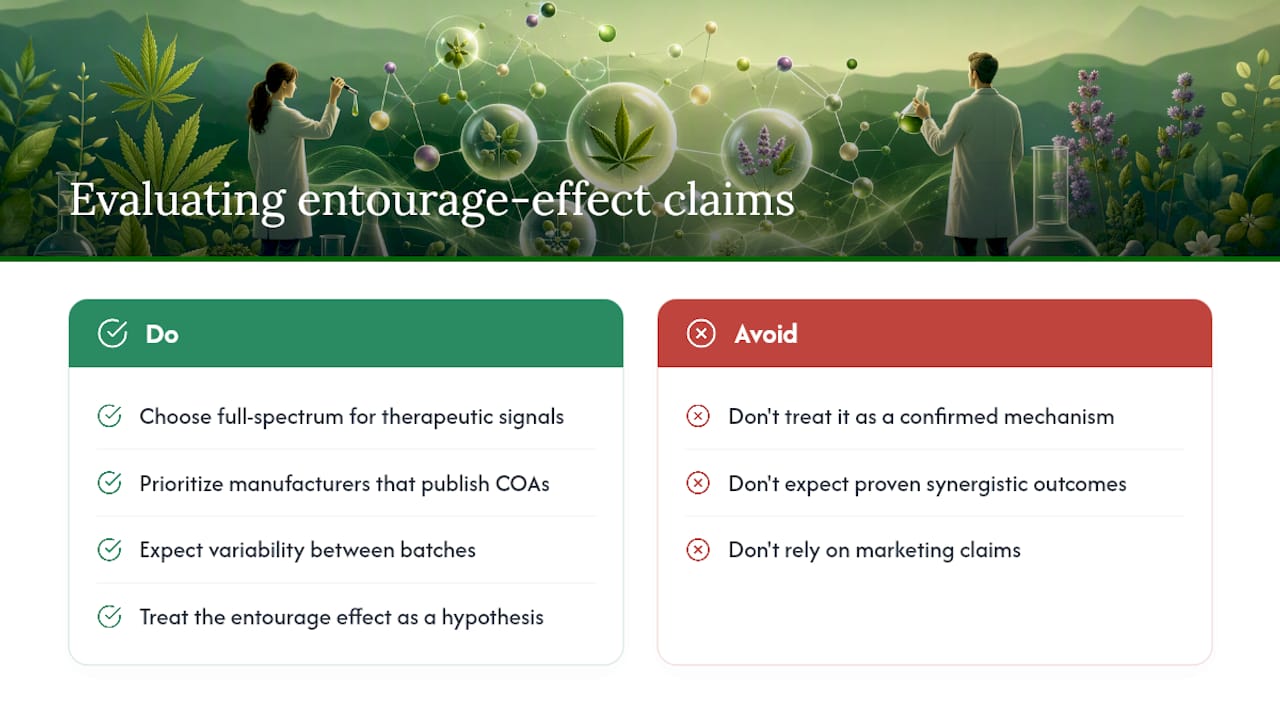
The most common mistake consumers make is treating the entourage effect as a confirmed mechanism rather than a working hypothesis. That distinction has real consequences. If you buy a full-spectrum product expecting a pharmacologically proven synergistic outcome, you are setting an expectation the science cannot currently support. If you buy it because whole-plant extracts have shown therapeutic signals in multiple systematic reviews and you want the broadest possible compound profile, that is a defensible, evidence-informed choice.
The marketing version of the entourage effect tends to flatten a genuinely interesting pharmacological question into a sales argument. The actual science is more nuanced and, frankly, more interesting. Researchers are working to understand how dozens of compounds interact across multiple receptor systems simultaneously, a problem that is analytically complex and clinically important. The fact that definitive proof is still pending does not mean the hypothesis is wrong. It means the trials needed to test it properly have not been run yet.
What I find underappreciated in most consumer-facing discussions is the role of batch variability. Two full-spectrum products from different manufacturers, or even different batches from the same manufacturer, can have meaningfully different terpene profiles. That variability is not a minor detail. It is the reason a product that worked well for you once may feel different the next time, and it is the reason clinical results from one study rarely replicate cleanly in another. Prioritizing manufacturers who publish batch-specific COAs is not just a quality signal. It is the only way to know whether you are actually taking a consistent product.
Wildheartsupplements full-spectrum products for curious, careful consumers
If you have read this far, you are the kind of person who wants to know what is actually in a product and why it might work. That is exactly who Wildheartsupplements formulates for.
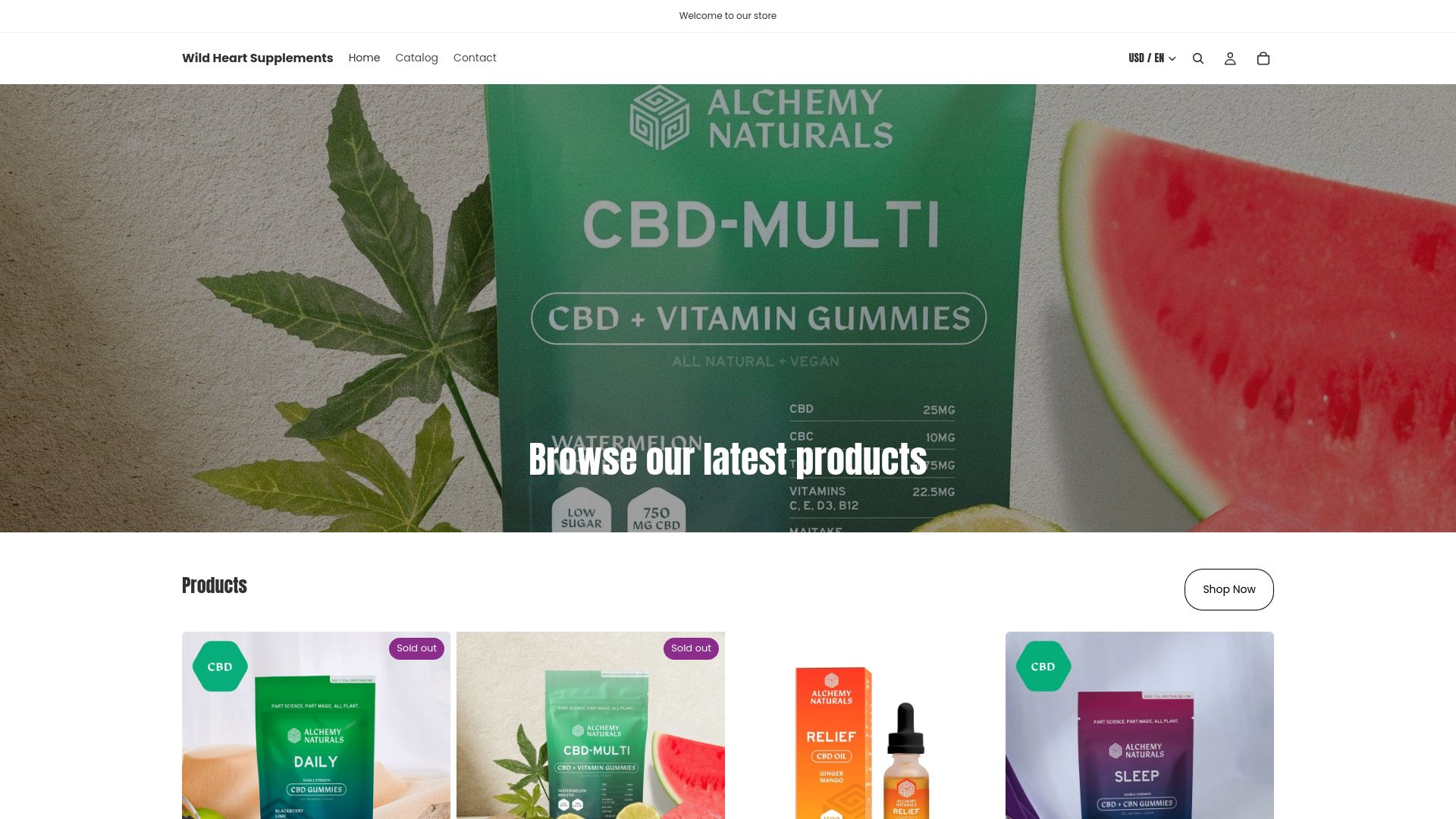
Wildheartsupplements offers nutraceutical-grade full-spectrum CBD oils and full-spectrum CBD gummies built around the quality signals that matter most in this category: third-party lab testing, batch-specific certificates of analysis, clear potency labeling, and consistent cannabinoid and terpene profiles across batches. For sleep-focused use, the CBD Sleep Oil 1500mg and CBD + CBN Sleep Gummies combine CBD with CBN in formulations designed for consistency. No clinical claims, no entourage guarantees. Just transparent, tested products for adults who want to make an informed choice. Browse the full range and check the COAs before you buy.
Useful sources
| Source | Description |
|---|---|
| Decoding the Postulated Entourage Effect of Medicinal Cannabis | Scoping review concluding that current literature is contradictory and the term often maps to established pharmacology concepts. |
| Charting the therapeutic landscape: evidence map on medical cannabis | 2024 evidence map of 194 systematic reviews; 278 of 489 treatment-effect descriptions classified as positive or potentially positive. |
| Clinical Benefits and Safety of Medical Cannabis Products (PMC) | Narrative review of clinical data on cannabinoid efficacy and adverse-effect profiles across conditions. |
| Terpenes Coupled with Cannabinoids for Mood and Anxiety Disorders (PMC) | Review of preclinical and limited clinical evidence for terpene-cannabinoid interactions in mood and anxiety conditions. |
| FDA: What you need to know about cannabis-derived products | FDA consumer guidance on regulatory status, safety concerns, and what to look for in cannabis products. |
| PubChem: Cannabidiol | Authoritative chemical and bioactivity data for CBD, including receptor targets and pharmacological properties. |
| PubChem: THC | Authoritative chemical and pharmacological data for ∆9-THC, including CB1 agonism and adverse-effect profile. |
Recommended
- 6-Pack: New Intimacy CBD Formulation (Maca, Horny Goat Weed, Tribulus, – Wild Heart Supplements
- CBD + CBN for Sleep: Does It Actually Work? | Wild Heart – Wild Heart Supplements
- 6-Pack CBD Relief Oil 1500mg | Bulk Pain Relief | Wild Heart – Wild Heart Supplements
- 6-Pack CBD Sleep Oil 1500mg | Bulk Value | Wild Heart Supplements