
CBD shows genuine anti-inflammatory potential in preclinical research, but human trial results are inconsistent, and no standard dose exists. The strongest evidence anchor is Epidiolex, the only FDA-approved CBD drug, which demonstrates that pharmaceutical-grade CBD can produce measurable clinical effects. For over-the-counter hemp-derived products, a 2025 systematic review found that pooled effects on circulating inflammatory biomarkers like IL-6 and TNF-α were trivial and imprecise. That does not mean CBD does nothing. It means the evidence is early, individual responses vary widely, and anyone expecting a reliable anti-inflammatory effect comparable to ibuprofen will likely be disappointed.
Who might reasonably consider trying CBD for inflammation:
- Adults with chronic musculoskeletal pain or inflammatory symptoms that have not fully responded to standard care
- People seeking an adjunct to existing treatment, not a replacement
- Anyone without contraindications (see safety section below)
Primary cautions before you start:
- CBD inhibits CYP450 enzymes, notably CYP3A4 and CYP2C19, which can affect blood levels of many prescription drugs.
- Liver enzyme elevation is possible at higher doses; baseline liver function tests are worth discussing with your clinician if you take statins or other hepatically metabolized drugs
- CBD is not safe in pregnancy or breastfeeding, and evidence in children outside of seizure disorders is essentially absent
Recommended next step: Talk to your clinician before starting, especially if you take any prescription medication. Then consider the conservative 6-week protocol outlined below.
Table of Contents
- What human studies actually show about CBD and inflammation
- Which form of CBD works best for inflammation?
- Practical dosing guidance: start low, titrate, and monitor
- Safety, side effects, and drug interactions you need to know
- How CBD compares with NSAIDs and steroids for inflammation
- How to choose a high-quality CBD product in the U.S.
- A safety-first 6-week plan to try CBD for inflammation
- U.S. legal status and what CBD products actually cost
- Wildheartsupplements: full-spectrum CBD options for your inflammation protocol
- Key Takeaways
- Why the “CBD cures inflammation” narrative misses the point
- Authoritative sources and further reading
What human studies actually show about CBD and inflammation
The honest summary: human evidence for CBD as an anti-inflammatory agent is promising in specific contexts and underwhelming in others. Preclinical models are almost uniformly positive. Human trials are not.
A 2025 systematic review and meta-analysis pooled data from randomized controlled trials and found the following effects on circulating inflammatory biomarkers:
| Biomarker | Pooled SMD | Confidence Interval | GRADE Certainty |
|---|---|---|---|
| IL-6 | -0.17 | -0.56 to 0.23 | Very low |
| IL-8 | -0.30 | -0.62 to 0.01 | Moderate |
| IL-10 | -0.10 | -0.83 to 0.63 | Low |
| TNF-α | -0.09 | -0.45 to 0.27 | Moderate |
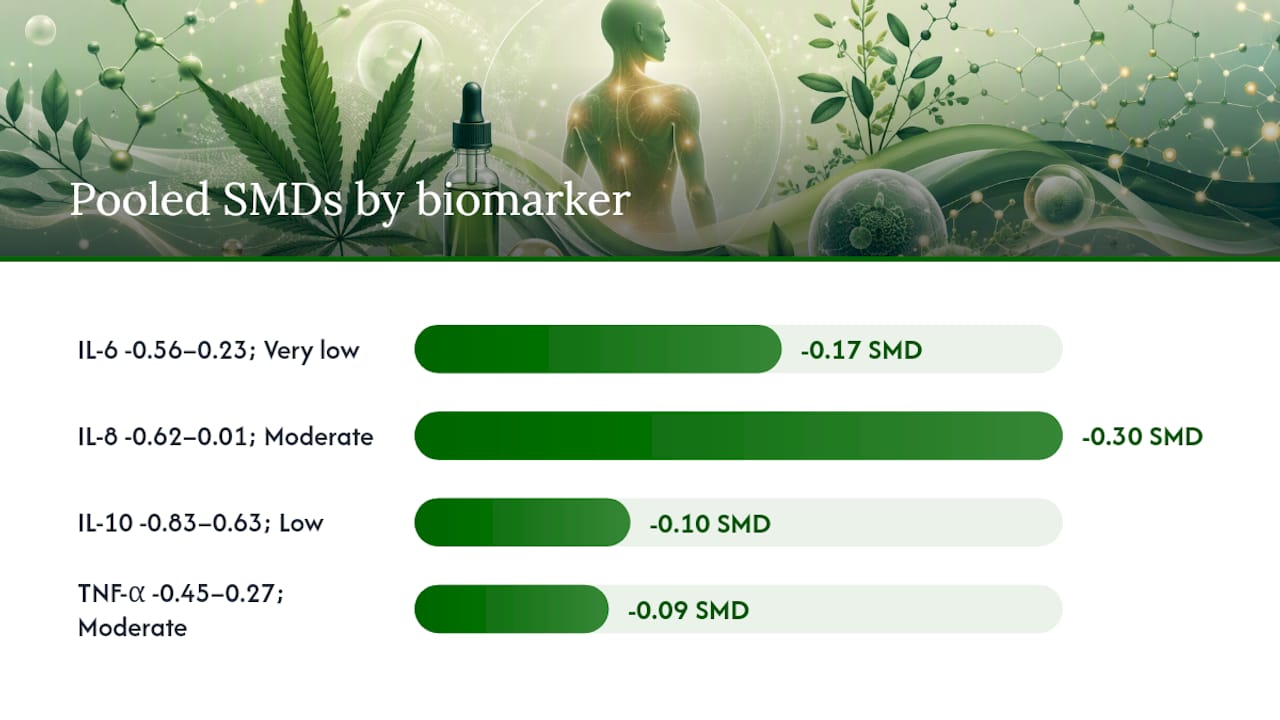
Every confidence interval crosses zero. That means none of these effects are statistically distinguishable from no effect at the pooled level. The IL-8 result comes closest, but the certainty is still only moderate. For IL-6, the evidence quality is rated very low, meaning the true effect could be substantially different from the estimate in either direction.
This does not mean CBD has no effect on inflammation. It means current trials are too small, too heterogeneous in dose and formulation, and too short to detect a consistent signal in circulating biomarkers. Condition-specific signals are more encouraging. Research documents organ-specific anti-inflammatory effects in lung, colon, and skin models, suggesting that CBD may work better in localized tissue contexts than as a systemic cytokine suppressor.
The JCI Insight single-cell human study is the most mechanistically detailed human data available. It found that CBD reduced T cell proliferation by 37% and CD70hi B cell proliferation by 17%, while simultaneously increasing the proportion of T effector memory cells. Cytokine changes were mixed: TNF-α decreased in some measures while IL-6 increased in others. This is not a clean anti-inflammatory story. It is a context-dependent immunomodulatory story, which aligns with what the broader mechanistic literature suggests.
What the evidence does and does not support:
- Supports: CBD modulates immune cell activity in humans in measurable ways
- Supports: Localized anti-inflammatory effects in tissue models (skin, gut, lung)
- Does not support: Reliable reduction of circulating inflammatory biomarkers at typical consumer doses
- Does not support: CBD as a replacement for evidence-based anti-inflammatory drugs in acute or severe inflammation
- Unclear: Long-term effects on inflammation in chronic disease; no adequately powered long-term RCTs exist
Why do animal models look so much better? Preclinical studies use inbred animals with standardized disease models, controlled doses, and often intraperitoneal or intravenous delivery that bypasses the bioavailability problem entirely. Human trials involve variable doses, oral delivery with low bioavailability, heterogeneous patient populations, and short follow-up. The gap between a mouse model of colitis and a human with Crohn’s disease is enormous.
Harvard Health summarizes the clinical picture accurately: preclinical data are promising, but unbiased clinical evidence remains limited, and the FDA has approved only one CBD medication for therapeutic use.
Which form of CBD works best for inflammation?
Topical CBD is the right choice for targeted joint or muscle inflammation. Oral CBD (oils, tinctures, gummies) is the choice for widespread or systemic inflammatory symptoms, with the understanding that systemic effects are modest and variable. Inhaled CBD produces the fastest onset but the shortest duration, and the respiratory risks of inhalation make it a poor choice for a chronic inflammation protocol.
Common forms and what to expect:
- Topical creams and balms: High local concentration, minimal systemic absorption, onset within 15–45 minutes for localized relief, duration 2–6 hours. Best for arthritis, muscle soreness, skin inflammation. Limited evidence but mechanistically sound given CB2 receptor density in peripheral tissue.
- Sublingual oils and tinctures: Faster absorption than capsules (onset 15–45 minutes), moderate bioavailability, easier to titrate dose. Best for systemic use when dose control matters.
- Gummies and capsules: Convenient, consistent dose per unit, but onset is 45–90 minutes and bioavailability is lower than sublingual. Good for daily maintenance dosing.
- Vapes and inhalation: Fastest onset (minutes), highest bioavailability, but duration is short (1–3 hours) and respiratory risks are not trivial. Not recommended for an inflammation protocol.
- Isolate vs. full-spectrum vs. broad-spectrum: Isolate is pure CBD with no other cannabinoids. Full-spectrum contains all hemp cannabinoids including up to 0.3% THC (the U.S. legal limit for hemp products). Broad-spectrum removes THC but retains other cannabinoids and terpenes. The “entourage effect” hypothesis holds that these compounds work better together, and some practitioners report better results with full-spectrum products, but the clinical evidence for the entourage effect in humans is limited.
Pro Tip: Full-spectrum products increase THC exposure, even at sub-0.3% concentrations. If you are subject to drug testing, choose a broad-spectrum or isolate product and verify the COA shows non-detectable THC.
| Feature | Topical (localized) | Oral systemic (oils, gummies) |
|---|---|---|
| Best for | Joint, muscle, skin inflammation | Widespread or autoimmune-related inflammation |
| Delivery method | Applied directly to skin | Sublingual or ingested |
| Evidence strength | Moderate (organ-specific models) | Low to moderate (inconsistent RCT data) |
| Typical dosing range | Apply 2–4x daily as needed | 20–40 mg/day starting range |
| Key safety notes | Minimal systemic exposure; check for skin irritants | CYP450 interactions; liver monitoring at higher doses |
Research on organ-specific anti-inflammatory effects supports the topical route for skin and musculoskeletal applications specifically, which is where the localized concentration advantage is most meaningful.

Practical dosing guidance: start low, titrate, and monitor
No universal dose for CBD exists. That is not a hedge. It reflects the actual state of the science. Dose-response relationships in human trials are inconsistent, and the effective dose varies with body weight, metabolism, the condition being treated, the product’s bioavailability, and individual endocannabinoid system variability.
Practical guides commonly recommend starting at a low dose and gradually increasing, with suggested starting ranges varying based on body weight and individual factors. For a typical adult, the starting range is quite broad, reflecting individual variability. The conservative approach is to start at the lower end (20–25 mg/day for most adults) and increase slowly.
Stepwise initiation protocol:
- Week 1: Start at 20–25 mg/day. For topical use, apply a pea-sized amount to the affected area twice daily. For oral use, take the dose in the evening to minimize any fatigue side effects while you assess tolerance.
- Week 2: If well tolerated and no adverse effects, assess whether you notice any change in pain or swelling. If no effect and no side effects, increase by 5–10 mg/day.
- Weeks 3–4: Continue titrating upward by 5–10 mg every 7–14 days. Most people find a useful range between 25–75 mg/day for systemic use.
- Week 5–6: Evaluate objectively. Use a simple 0–10 pain or swelling scale tracked daily. If no meaningful improvement by week 6, the product or dose may not be right for you.
- Stop immediately if you experience significant GI upset, jaundice, unusual fatigue, or any sign of a drug interaction.
Timeline expectations:
- Topical: some localized relief within the first 1–2 weeks if the product is effective for you
- Oral systemic: 4–6 weeks is the minimum reasonable trial period for anti-inflammatory effects
- No response at 6 weeks: reassess with your clinician before continuing or increasing dose
Harvard Health’s pain-focused guidance notes that determining an effective dose is genuinely challenging and that results are mixed across individuals, which is consistent with the broader clinical picture.
Pro Tip: Keep a simple daily log: date, dose, product, pain score (0–10), sleep quality, and any side effects. After 6 weeks, you will have objective data to discuss with your clinician rather than a vague impression.
Special populations requiring clinician supervision:
- Patients on immunosuppressants (tacrolimus, cyclosporine): CBD can alter drug levels; therapeutic drug monitoring may be needed
- Patients on blood thinners (warfarin): CBD inhibits CYP2C9, which metabolizes warfarin; INR monitoring is warranted
- Elderly adults: slower metabolism, higher risk of drug interactions, start at the lower end of any range
- Children: outside of FDA-approved Epidiolex for seizure disorders, CBD use in children lacks adequate safety data
Safety, side effects, and drug interactions you need to know
CBD is generally well tolerated at moderate doses, but it has clinically important interactions and potential adverse effects that are not trivial, particularly for anyone on prescription medications.
Common side effects:
- Fatigue or sedation can occur, particularly when combined with other CNS depressants.
- GI upset: nausea, diarrhea, changes in appetite
- Dry mouth
- Transaminase elevation (liver enzyme increase) may occur, especially at higher doses or with concurrent hepatotoxic drugs.
Serious but less common risks:
- Hepatotoxicity at high doses; most documented cases involve doses far above typical consumer ranges, but baseline and periodic liver function tests are prudent for anyone on statins, antifungals, or other hepatically metabolized drugs
- Additive immunosuppression in transplant patients or those on immunosuppressive therapy
Drug interactions — the ones that matter most:
The CYP450 enzyme system is the central concern. CBD inhibits CYP3A4 and CYP2C19, two of the most important drug-metabolizing enzymes in the liver. Drugs that depend on these enzymes for clearance can accumulate to higher-than-expected levels when CBD is added.
The JCI Insight human study specifically documented a pharmacokinetic interaction between CBD and tacrolimus, an immunosuppressant used in organ transplant recipients. This is a narrow therapeutic index drug where small changes in blood levels can mean the difference between rejection and toxicity. Anyone on tacrolimus should not start CBD without specialist oversight and therapeutic drug monitoring.
Other significant interactions include warfarin (CYP2C9), clobazam (CYP2C19), and any drug with a narrow therapeutic index metabolized by CYP3A4.
When to stop CBD immediately and contact your clinician: Yellowing of the skin or eyes (jaundice); severe abdominal pain; significant increase in bruising or bleeding; signs of drug toxicity from a co-administered medication; any new neurological symptoms. Do not use CBD if you are pregnant, breastfeeding, planning an organ transplant, or have severe liver disease.
Routine monitoring guidance:
- If you are on any CYP450-metabolized drug: discuss with your prescriber before starting CBD
- If you are on statins or other hepatotoxic medications: baseline liver function tests before starting, recheck at 4–6 weeks
- If you are on warfarin or other anticoagulants: INR monitoring after any dose change
This article provides general information, not medical advice. Confirm current guidance with your clinician or a qualified pharmacist before starting CBD, especially if you take prescription medications.
How CBD compares with NSAIDs and steroids for inflammation
CBD is not a direct substitute for NSAIDs or corticosteroids in most acute inflammatory conditions. The evidence base, onset speed, and magnitude of effect are simply not comparable for acute or severe inflammation.
| Feature | NSAIDs (e.g., ibuprofen, naproxen) | Corticosteroids | CBD |
|---|---|---|---|
| Mechanism | COX-1/COX-2 inhibition | Broad immune suppression via glucocorticoid receptor | CB2, PPARγ, NF-κB, antioxidant |
| Evidence base | Robust RCTs across many conditions | Robust RCTs; decades of clinical use | Limited/inconsistent human RCT data |
| Onset | 45–90 minutes (oral) | Hours to days depending on route | 15–90 minutes (variable by form) |
| Effect size for acute inflammation | Large and reliable | Large and reliable | Small to modest; variable |
| Key safety concerns | GI bleeding, renal impairment, cardiovascular risk | Immunosuppression, glucose elevation, bone density | Drug interactions, liver enzymes, sedation |
| Appropriate for acute severe inflammation | Yes | Yes | No |
| Potential adjunctive role | Sometimes combined with CBD for chronic pain | Rarely combined | Chronic musculoskeletal pain, chronic inflammatory symptoms |
Where CBD might add value:
- Chronic low-grade musculoskeletal pain where long-term NSAID use carries GI or cardiovascular risk
- Patients who cannot tolerate NSAIDs due to renal impairment or GI history
- As an adjunct to physical therapy or weight management for chronic inflammatory conditions
Where standard anti-inflammatories are clearly the better choice:
- Acute injury with significant swelling (sprain, fracture, post-surgical inflammation)
- Acute flare of a known inflammatory disease (rheumatoid arthritis, gout, inflammatory bowel disease)
- Any situation where a rapid, reliable, large anti-inflammatory effect is needed
The key point from Harvard Health’s pain analysis is that CBD may be adjunctive for some chronic pain conditions, not a first-line replacement. That framing is accurate and worth keeping in mind when weighing options.
How to choose a high-quality CBD product in the U.S.
Prefer third-party lab-tested full-spectrum or broad-spectrum products with accessible Certificates of Analysis (COAs) that show the actual cannabinoid profile and contaminant screening results. Without a COA, you are buying on faith.
What a COA must show:
- Cannabinoid potency panel: Confirms actual CBD content matches the label claim. Underdosing is common in the unregulated market.
- THC content: Must be below 0.3% dry weight for legal hemp products in the U.S. Verify this, not just the label claim.
- Pesticide screening: Hemp is a bioaccumulator; it absorbs whatever is in the soil. Pesticide residues are a real concern.
- Heavy metals panel: Lead, arsenic, cadmium, mercury. Any reputable product tests for all four.
- Residual solvents: Relevant for products made with solvent-based extraction (ethanol, butane). CO2 extraction generally produces cleaner results.
- Batch number and date: The COA should match the batch number on your product. A generic COA with no batch reference is a red flag.
- Microbial contamination: Mold and bacteria testing matters, especially for products stored in humid conditions.
Red flags to avoid:
- No COA available, or COA is not accessible by batch number on the brand’s website
- Potency claims that seem unrealistically high for the price point
- Vague ingredient lists (“hemp extract” with no mg specification)
- No extraction method disclosed
- Claims to cure or treat specific diseases (this violates FDA regulations for dietary supplements)
Full-spectrum vs. broad-spectrum vs. isolate:
Full-spectrum retains all hemp cannabinoids including trace THC (up to 0.3%). Broad-spectrum removes THC but keeps other cannabinoids and terpenes. Isolate is pure CBD. Full-spectrum products are often preferred by practitioners for the potential entourage effect, but they carry a small risk of positive drug tests and are not appropriate for everyone.
Pro Tip: When reading a COA, check that the testing lab is ISO 17025 accredited. This accreditation means the lab meets internationally recognized standards for technical competence. A COA from a non-accredited lab is worth considerably less.
A safety-first 6-week plan to try CBD for inflammation
Follow a conservative 6-week trial with objective symptom tracking and clinician communication before drawing any conclusions about whether CBD is working for you.
Week-by-week protocol:
-
Before you start: Choose your product (topical for localized inflammation, oral oil or gummies for systemic). Verify the COA. Note your baseline pain or swelling score (0–10 scale). If you take prescription medications, speak with your clinician or pharmacist first. Get baseline liver function tests if on statins or other hepatotoxic drugs.
-
Week 1: Begin at 20–25 mg/day oral, or apply topical twice daily to the affected area. Take oral CBD at the same time each day. Log your pain score, sleep quality, and any side effects every evening.
-
Week 2: Assess tolerance. No adverse effects? Evaluate whether you notice any change. If no effect and no side effects, increase oral dose by 5–10 mg. Continue topical as directed. Check in with your clinician if you notice any unusual symptoms.
-
Weeks 3–4: Continue titrating oral dose upward by 5–10 mg every 7–14 days if needed and tolerated. Most people find a useful range between 25–75 mg/day. For topical use, you can increase application frequency to 3–4 times daily if needed.
-
Week 5: Conduct a mid-protocol review. Compare your current average pain score to your baseline. If you have seen a meaningful improvement (2 or more points on a 0–10 scale), continue. If no change, consider whether the dose, product type, or delivery method needs adjustment.
-
Week 6: Final evaluation. If you have seen meaningful improvement, discuss continuing with your clinician. If no improvement after 6 weeks at an adequate dose, CBD may not be the right tool for your specific condition.
Monitoring checklist:
- Daily: pain/swelling score, sleep quality, GI symptoms, energy level
- Weekly: note any new symptoms or changes in other medications’ effects
- At 4–6 weeks: repeat liver function tests if on interacting medications
- Stop and contact your clinician if: jaundice, severe GI distress, unusual bruising, or signs of drug interaction
Combining CBD with other anti-inflammatory strategies:
CBD works best as part of a broader approach. Regular exercise reduces systemic inflammatory markers independently of any supplement. Weight management reduces adipose-tissue-driven inflammation. Physical therapy addresses biomechanical contributors to joint inflammation. Evidence-based pharmaceuticals (NSAIDs, DMARDs for autoimmune conditions) remain the standard of care for many conditions. CBD fits as an adjunct within this framework, not as a replacement for any of it.
Pro Tip: Use a free app like Bearable or a simple spreadsheet to track your daily scores. Six weeks of logged data gives you something concrete to show your clinician, which is far more useful than “I think it helped a little.”
| Checkpoint | What to assess |
|---|---|
| Baseline (Day 0) | Pain/swelling score, current medications, liver function if indicated |
| Week 2 | Tolerance, any side effects, early topical response |
| Week 4 | Dose adequacy, systemic effect onset, drug interaction signs |
| Week 6 | Overall efficacy vs. baseline, decision to continue or stop |
U.S. legal status and what CBD products actually cost
Hemp-derived CBD products containing less than 0.3% THC are federally legal under the 2018 Farm Bill. Marijuana-derived CBD remains a Schedule I controlled substance at the federal level, regardless of state laws permitting marijuana use. That distinction matters for purchasing, shipping, and workplace drug testing.
Key regulatory points:
- The FDA has approved Epidiolex as a prescription CBD drug for rare seizure disorders. This is the only FDA-approved CBD medication and represents a fundamentally different regulatory category from over-the-counter hemp products.
- The FDA has not approved nonprescription CBD products for any therapeutic use. Selling CBD as a dietary supplement with disease claims violates FDA regulations.
- State laws vary. Some states have additional restrictions on CBD sales, potency limits, or product types. Check your state’s current rules before purchasing.
- Shipping hemp-derived CBD across state lines is generally permitted under federal law, but some carriers have their own restrictions.
Typical retail price ranges:
CBD tinctures and oils vary widely in price depending on brand, formulation, and testing quality; gummies similarly show price ranges reflecting market variability. Products at the lower end of the price range often cut corners on third-party testing or use lower-quality extraction methods. Full-spectrum products with accessible COAs and ISO-accredited lab testing tend to sit in the middle to upper range, and that premium is generally worth paying.
What separates a $40 tincture from a $90 one is usually not the CBD itself. It is the extraction method (CO2 vs. solvent), the testing rigor (ISO-accredited lab vs. in-house), the cannabinoid profile (full-spectrum vs. isolate), and the consistency of batch potency. Harvard Health notes that the lack of FDA regulation for most CBD products means quality control varies enormously across brands, which is exactly why COA verification matters before any purchase.
Wildheartsupplements: full-spectrum CBD options for your inflammation protocol
Wildheartsupplements offers third-party lab-tested, full-spectrum CBD oils and gummies that align directly with the quality checklist and 6-week protocol above. If you have read this far and are ready to try a structured approach, here is how their products map to the use cases covered in this guide.
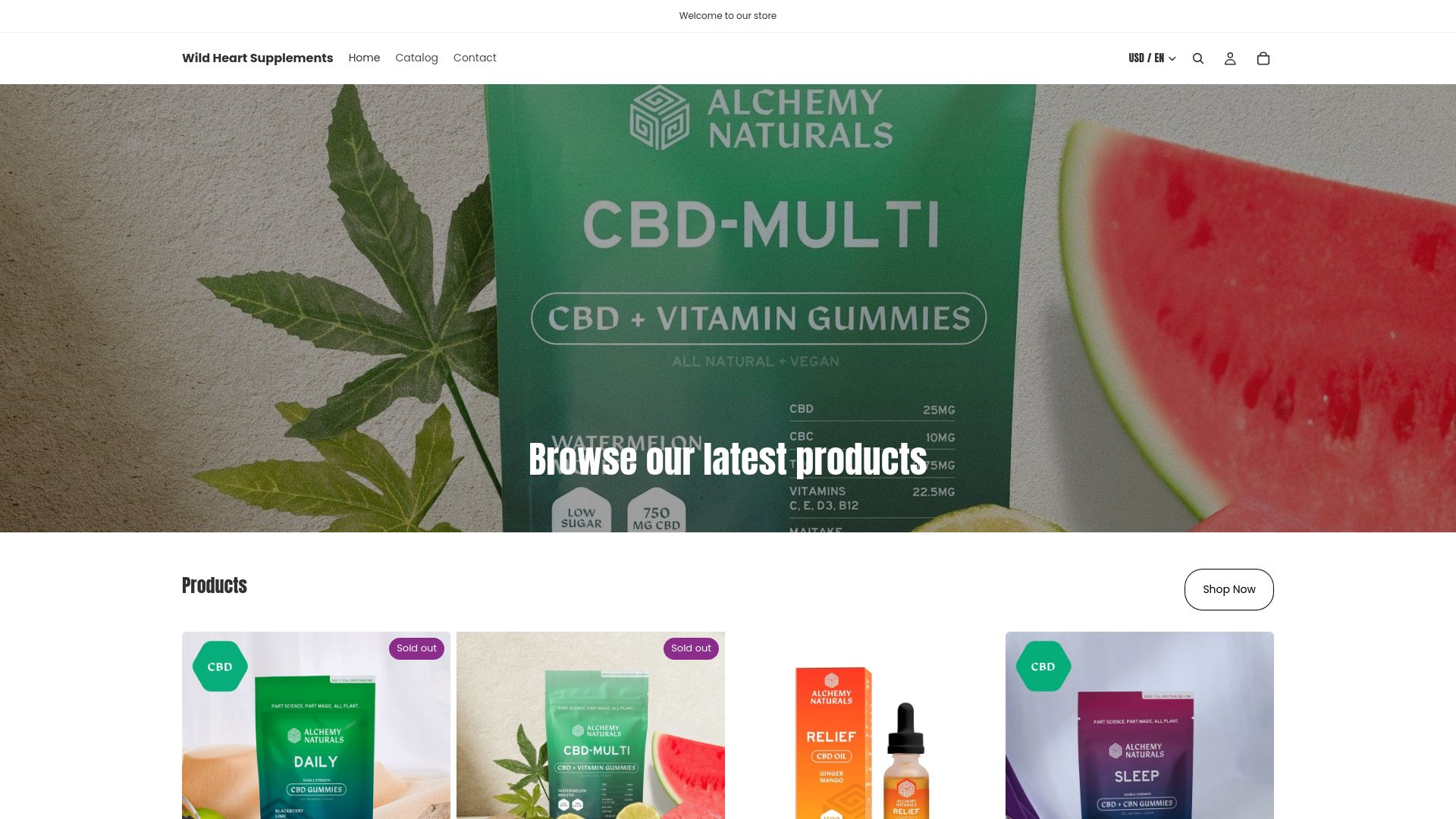
The Relief CBD Oil 1500mg is the primary recommendation for adults targeting systemic inflammation or chronic musculoskeletal pain. It provides sufficient volume to support a multi-week trial at typical oral dosing ranges, and the sublingual delivery format allows for precise dose titration. For those who prefer a daily oral format without measuring, the full-spectrum CBD gummies offer a consistent per-gummy dose alongside functional mushroom ingredients, which makes them a practical choice for daily maintenance use.
Both products are full-spectrum, meaning they retain the broader cannabinoid and terpene profile associated with the entourage effect. COAs are available, which is non-negotiable for any product you are putting into a structured health protocol. The formulations are nutraceutical-grade, not mass-market filler.
If you are planning a longer trial or want to reduce cost per dose, the 6-pack Relief Oil brings the per-mg cost down meaningfully. Browse the full CBD gummies and tinctures range to find the format and potency that fits your starting dose.
As always, consult your clinician before starting CBD if you take any prescription medications, particularly immunosuppressants, anticoagulants, or drugs with a narrow therapeutic index.
Key Takeaways
CBD’s anti-inflammatory potential is biologically plausible and supported by preclinical data, but human trial evidence for circulating biomarker reduction is inconsistent and often trivial, making a conservative, monitored 6-week trial the most defensible approach for most adults.
| Point | Details |
|---|---|
| Human evidence is limited | Pooled SMDs and confidence intervals from the 2025 systematic review: IL-6 SMD -0.17 (95% CI -0.56 to 0.23), IL-8 SMD -0.30 (95% CI -0.62 to 0.01), IL-10 SMD -0.10 (95% CI -0.83 to 0.63), and TNF-α SMD -0.09 (95% CI -0.45 to 0.27); all CIs cross zero. |
| Mechanisms are real but variable | CB2, PPARγ, and NF-κB pathways are documented; clinical translation depends heavily on dose, formulation, and individual response. |
| Drug interactions are the top safety risk | CYP3A4 and CYP2C19 inhibition can raise levels of many prescription drugs; tacrolimus interaction is documented in human data. |
| Start low and track objectively | Begin at 20–25 mg/day oral or topical twice daily; use a 0–10 symptom scale and log daily for 6 weeks before drawing conclusions. |
| Wildheartsupplements for structured trials | The Relief CBD Oil 1500mg and full-spectrum gummies are third-party tested, full-spectrum options suited to the 6-week protocol above. |
Why the “CBD cures inflammation” narrative misses the point
The most common mistake people make with CBD and inflammation is treating it as a binary: either it works or it does not. The actual picture is more interesting and more useful than that.
CBD is a context-dependent immune modulator. The JCI Insight human study found it reduced T cell proliferation while simultaneously increasing T effector memory cells, and produced mixed cytokine changes depending on the measure. That is not a failure of the compound. That is what immune modulation looks like in a complex biological system. The problem is that the wellness industry has been selling CBD as though it were ibuprofen with better PR, and that framing sets people up for disappointment.
What the evidence actually supports is this: CBD may reduce localized inflammatory signaling in accessible tissues, may modulate immune cell activity in ways that are clinically meaningful for some conditions, and may serve as a useful adjunct for chronic low-grade inflammation where long-term NSAID use carries real risks. That is a legitimate, defensible use case. It is just not the “cure inflammation overnight” story that sells products.
The other thing worth saying plainly: the absence of a standardized dose is not a minor inconvenience. It is the central practical challenge. Two people taking the same product at the same dose can have meaningfully different blood concentrations due to differences in gut absorption, liver metabolism, and body composition. That is why the 6-week tracked protocol matters more than any single dose recommendation. You are not following a recipe. You are running a personal experiment with objective checkpoints.
If you go in with calibrated expectations, a quality product with a verified COA, and a willingness to track your response honestly, CBD for inflammation is worth a structured trial for the right conditions. If you are expecting it to replace your rheumatologist’s prescription, you will be disappointed.
Authoritative sources and further reading
The sources below represent the highest-quality evidence used in this article, ranked by study design. Systematic reviews and meta-analyses sit at the top; mechanistic human studies and reputable health organization summaries follow.
Primary sources cited in this article:
- The Pleiotropic Influence of Cannabidiol and Tetrahydrocannabinol on Inflammatory Biomarkers: A Systematic Review and Meta-Analytical Synthesis
- Antioxidative and Anti-Inflammatory Properties of Cannabidiol — PMC
- Cannabidiol (CBD) — What we know and what we don’t - Harvard Health
- Can CBD oil help manage pain? — Harvard Health
- FDA approves first drug comprised of an active ingredient derived from marijuana to treat rare, severe forms
- ncbi article supporting organ-specific anti-inflammatory effects (PMC9288157)
How to use these sources: Start with the 2025 systematic review for the clearest picture of what human trials show. Read the JCI Insight study if you are on immunosuppressants or want to understand the mechanistic complexity. Use the Harvard Health pieces for accessible clinical context. Go to the FDA announcement for the definitive regulatory statement on Epidiolex.
For COA verification and regulatory guidance: The FDA’s consumer updates on CBD provide current guidance on what is and is not permitted in product labeling. ISO 17025 accreditation for testing labs can be verified through the ILAC MRA database.
Recommended
- 6-Pack CBD Relief Oil 1500mg | Bulk Pain Relief | Wild Heart – Wild Heart Supplements
- CBD + CBN for Sleep: Does It Actually Work? | Wild Heart – Wild Heart Supplements
- 6-Pack: New Intimacy CBD Formulation (Maca, Horny Goat Weed, Tribulus, – Wild Heart Supplements
- 6-Pack: CBD Multi-Vitamin Gummies – Wild Heart Supplements